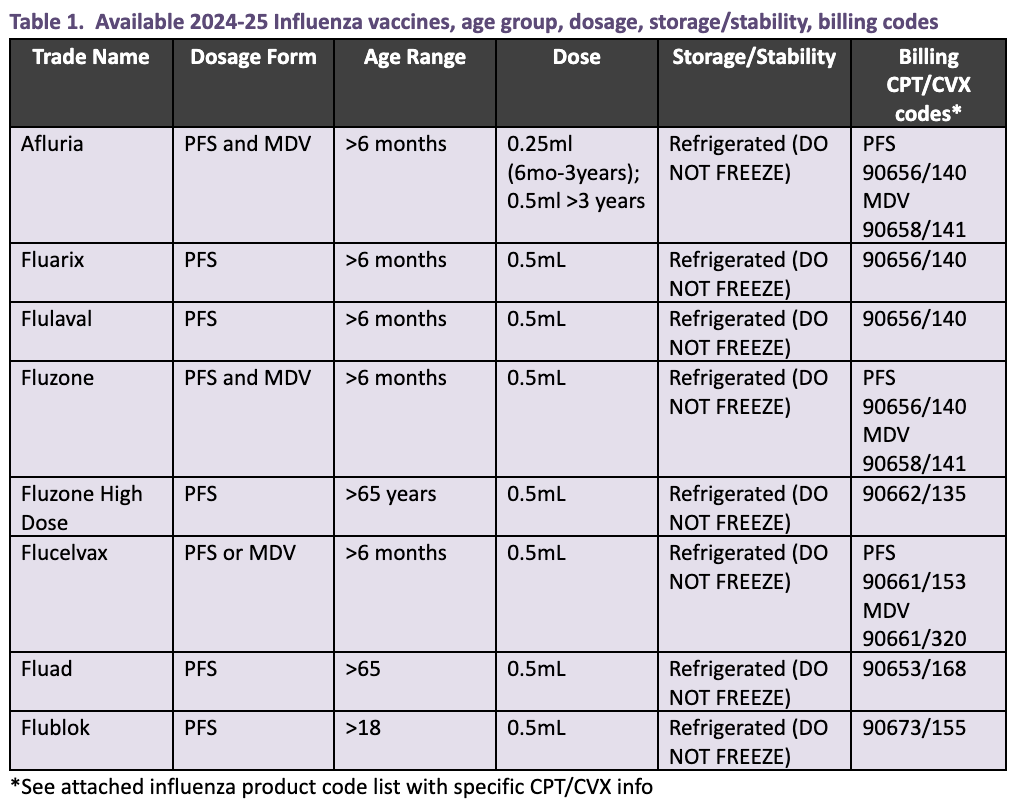
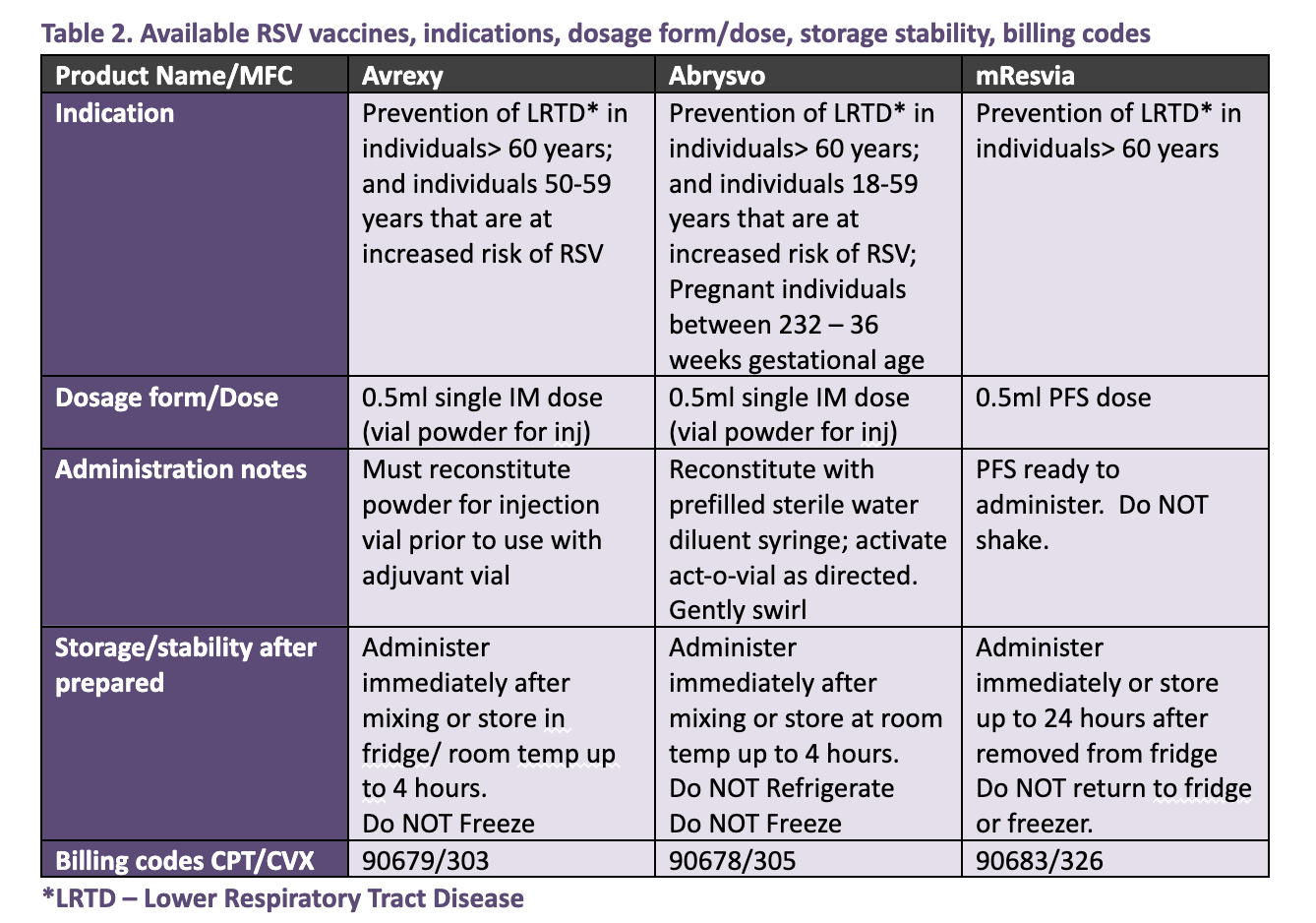
As we enter mid-fall and illnesses such as the influenza virus are on the rise, it is important to review the available vaccines, guidelines, and changes that have occurred. This guide will help consolidate key vaccine information into a single document for your reference and convenience as well as provide access to VIS and consent forms. Though this provides some general information, it is important to look at individualized patient needs and prescriber specific recommendations.
Everyone over the age of 6 months should receive a dose to be up to date.
Best time for vaccination is September/October.
All flu vaccines are trivalent formulation this year, inactivated, recombinant, live attenuated, along with High-Dose.
ACIP made a special off-label recommendation for people 18-64 with immunosuppression from organ transplant can now be given the High- Dose or adjuvanted flu vaccine which is typically indicated for ages 65+.
All individuals over the age of 6 months are eligible to receive a dose of the 2024-25 COVID-19 vaccine (pediatrics have more specific dosing based on prior vaccine history).
Adults over the age of 65, or individuals that are moderate to severely immunocompromised are now eligible to receive a 2nd dose of the 2024-25 formulation 6 months after the previous dose to be considered up to date.
An additional third dose can be considered based on shared clinical decision making for severely immunocompromised individuals with at least a two-month interval from last dose.
Reminder – moderate to severely compromised individuals dosing guidelines suggest that the initial dose series should be completed with the 2024-25 vaccine, meaning they will need the initial three-dose series and then the additional 4th dose after 6 months.
Vaccine Compatibility
Co-administration of Flu, COVID-19, RSV and Pneumococcal is safe and effective.
If vaccines are administered together, make sure a different site is used for each dose.
Co-administration can lead to increased side effects and muscle soreness.
Though there is no limit of how many vaccines can be administered at the same time, it is recommended to administer no more than 2-3 to limit side effects and identify any vaccine related reactions.
Vaccine Billing
Influenza, Pneumoccal, and COVID-19 vaccines are typically covered under Medicare Part B and typically ordered as facility stock vaccines.
RSV vaccine is covered under Part D and should be ordered as patient specific orders for pharmacy to bill Part D.
Strengthening Pneumococcal Protection in Long-Term Care
Newer vaccine options like CAPVAXIVE provide facilities with another tool to strengthen prevention efforts and support healthier outcomes throughout their communities.
August 2026
Joel Zupnick Discusses Medication Coordination in McKnight’s Long-Term Care News
SpecialtyRx Founder Joel Zupnick explains how stronger medication coordination, AI, and pharmacy collaboration can improve safety and efficiency in long-term care.
July 2026
How Drug Shortages Are Affecting Medication Safety in Long-Term Care
Drug shortages are placing additional pressure on long-term care communities, where residents often rely on multiple medications and cannot afford interruptions in therapy.