June marks Alzheimer’s and Brain Awareness Month—a time to focus on proactive brain health and the evolving care strategies for those living with Alzheimer’s disease and other forms of dementia. At SpecialtyRx, we’re taking this opportunity to share practical ways facilities can support residents, educate staff and families, and stay informed on current treatment options.
Supporting Brain Health: Small Steps, Meaningful Impact
Alzheimer’s and dementia affect millions of people, many of whom reside in long-term care settings. While these conditions were once addressed only after diagnosis, today’s approachincludes early detection and daily habits that support brain health.
There are many simple ways to promote cognitive well-being among residents, and educationplays a critical role, especially for caregivers and family members who may be the first tonotice changes.
The Alzheimer’s Association outlines ten key habits that support brain health. Below are a fewthat can be easily incorporated into everyday routines in long-term care facilities.
Keep the Mind Active: Puzzles, word games, and memory activities placed in commonareas help residents stay sharp—and offer a chance to socialize.
Encourage Movement: Physical activity supports both body and brain. Group classes,such as chair yoga or Zumba Gold, are a fun and effective way to get moving.
Focus on Fall Prevention: Head injuries are a serious concern. Partner with yourconsultant pharmacist to review medications that may cause dizziness or drowsiness,especially those flagged by the Beers Criteria.
Manage Blood Pressure: Stable blood pressure is essential for brain health. Usemedication, dietary guidance, and physical activity to help residents stay within ahealthy range, and involve families in the conversation.
Address Diabetes: Diabetes management goes hand in hand with heart and brainhealth. Encourage consistent care plans that include medication, balanced nutrition, andregular exercise.
Promote Healthy Weight: Work with your dietitian, nutritionist, and food service team tooffer healthy options and weight education. Engaging families and caregivers canstrengthen results.
Improve Sleep Quality: Poor sleep can worsen cognitive decline. Encourage good sleephygiene through calming routines, environmental adjustments, and addressingunderlying issues like pain or sleep apnea without over-relying on medication.
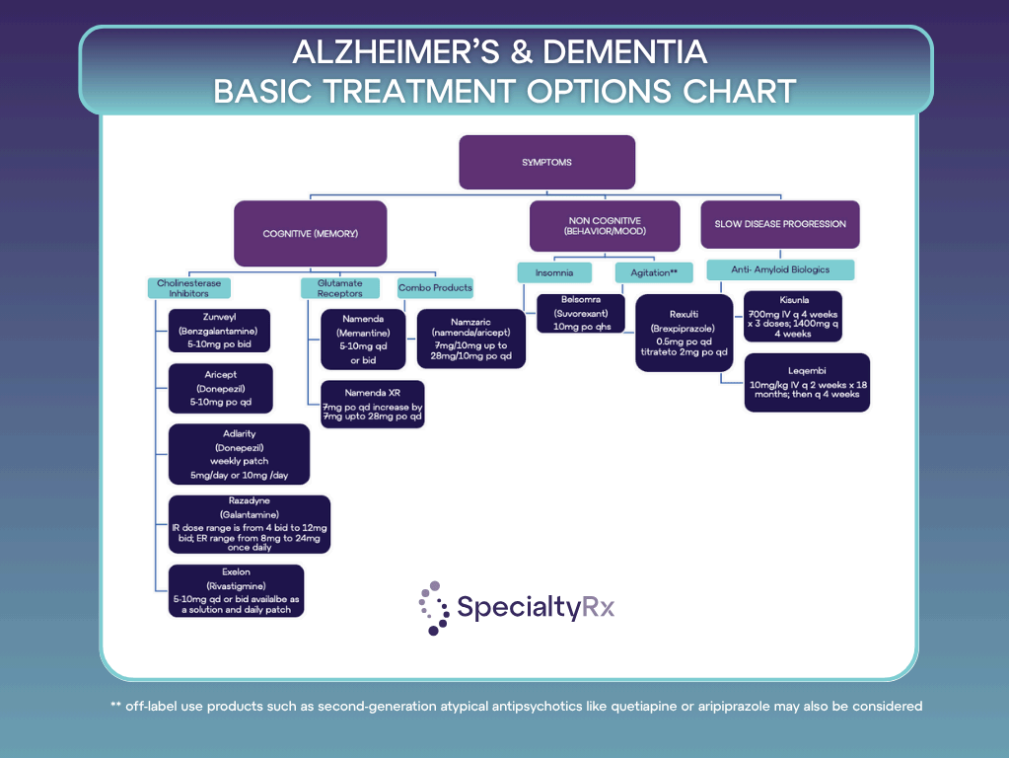
In addition to healthy habits, medication can play a key role in both managing symptoms andslowing the course of Alzheimer’s disease.
Medications for Cognitive Symptoms
Drugs that support memory and thinking include:
Cholinesterase Inhibitors such as Donepezil (Aricept) and Rivastigmine
(Exelon)Glutamate Regulators like Memantine (Namenda)
For residents who have trouble swallowing, there are alternatives like Adlarity, a once-weeklydonepezil patch.
Managing Non-Cognitive Symptoms
Residents may also experience sleep issues and behavioral changes:
Sleep Disorders: Suvorexant (Belsomra) can support more restful sleep
Agitation or Behavioral Symptoms: Brexpiprazole (Rexulti) is approved for agitationlinked to Alzheimer’s dementia
Medications That Target Disease Progression
Newer treatments focus on slowing the disease itself. These biologic therapies areadministered via infusion and are designed for use in early-stage Alzheimer’s:
Donanemab (Kisunla)
Lecanemab (Leqembi)
These medications work by targeting the amyloid plaques that build up in the brain, which area hallmark of Alzheimer’s disease.
Final Thoughts
Alzheimer’s and dementia care continues to evolve, with promising developments in bothprevention and treatment. By combining practical daily habits with appropriate medication strategies, facilities can make a meaningful difference in residents’ lives. SpecialtyRx is hereto support you with the tools, education, and guidance you need to deliver confident,compassionate care.
May 6th was World Asthma Day, and SpecialtyRx is here to give you all the latest updates around Asthma guidelines!
September 2026
Influenza 2026-27 Season Vaccination Updates for Nursing Homes
Early preparation and prompt influenza vaccination help protect residents, reduce outbreaks, and support a safer healthcare environment throughout the flu season. Facilities should ensure vaccine ordering, consent collection, staff education, and VIS distribution are in place before vaccine shipments arrive.
July 2024
New COVID-19 Vaccine 2024-25 Formulation
On June 5, 2024, the Vaccines and Related Biological Products Advisory Committee (VRBAC) and FDA panel met and unanimously voted for the JN.1 strain for the new fall 2024-25 COVID-19 vaccine formulation. A week later, based on updated data, the FDA asked the vaccine manufacturers to focus on the KP.2 and KP.3 strains of the JN.1 lineage as they are becoming the more dominant strains. It is anticipated that the change requested by the FDA will not cause any delays in the manufacturing of the new formulations.