As we close out 2025, the holiday season is in full swing—and with it comes flu season and other circulating viruses.
Read More
Throughout the fall, much of the focus has been on vaccination as a key preventive measure. However, it is equally important to recognize flu symptoms and understand current treatmentoptions and guidelines. Early identification and timely treatment can help limit the severityand duration of illness for individuals who test positive for influenza.
The CDC has released updated influenza treatment guidelines that place special emphasison individuals at high risk for serious flu-related complications. While many otherwise healthyindividuals can recover with rest, hydration, and symptom management, high-risk populationsoften require closer monitoring and prompt antiviral treatment.
Individuals considered high risk due to medical conditions include:
Asthma
Diabetes
COPD or cystic fibrosis
Heart disease
Neurological conditions
Blood disorders (such as sickle cell disease)
Kidney or liver disorders
Severe obesity (BMI greater than 40)
Weakened immune systems due to HIV, cancer, chemotherapy, or immunosuppressivemedications
Other high-risk populations include:
Adults aged 65 and older
Children under the age of 2
Pregnant women and those up to two weeks postpartum
Individuals residing in nursing homes or other long-term care facilities
If influenza is suspected and at least one symptom is present—or if there has been known exposure to others who have tested positive—the individual should be tested for flu. This is critical because antiviral medications are most effective when initiated within 48 hours ofsymptom onset.
Nursing staff play a key role in early detection by closely monitoring symptoms and routinely asking residents about how they are feeling. This is especially important for residents who may be confused, disoriented, or unable to clearly communicate symptoms. When flu is strongly suspected, treatment may be started empirically, even before test results areavailable.
When administered promptly, antiviral medications can reduce symptom severity, shorten theduration of illness, and—most importantly—help prevent serious complications such aspneumonia and hospitalization.
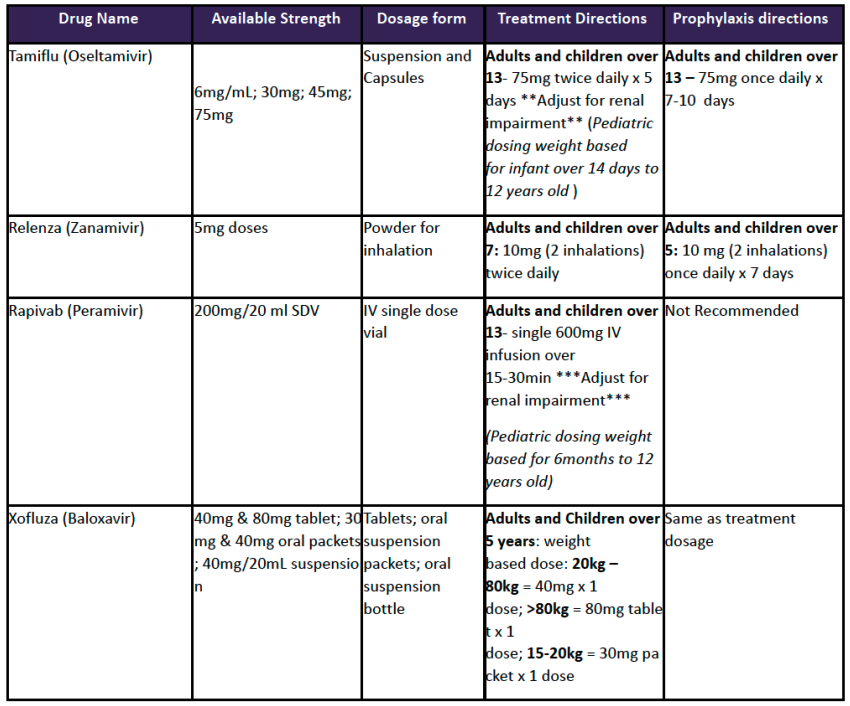
Currently, four antiviral medications are approved and recommended for influenza treatment,available in various dosage forms. Tamiflu is available as a tablet or liquid, Relenza as aninhaled powder, and Rapivab as a single intravenous dose. The most appropriate optiondepends on factors such as patient age, renal function, dosage form, and ability to adhere totreatment.
The table below lists anti-viral options, dosage, routes, and common directions:
Renal Impairment dosing Tamiflu: Mild (60-90ml/min = 75mg twice daily x 5 days); Moderate (30-60ml/min = 30mg twice daily x 5 days); Severe (10-30ml/min = 30mg once daily x 5days); ESRD requires further adjustment dosing with hemodialysis cycle
***Renal Impairment dosing Relenza in Adults: CrCL >50 = 600mg x 1 dose; CrCL 30-49= 200mg x 1 dose; CrCL 10-29 = 100mg x 1 dose***
Having antiviral options, dosing information, and directions readily available can help ensure timely and accurate pharmacy orders, allowing treatment to begin as quickly as possible when flu is suspected or confirmed.
SpecialtyRx wishes you a warm, safe, and healthy rest of the holiday season—and a healthyflu season, too.
Recent CMS updates are increasing scrutiny around the use of psychotropic medications in long-term care settings.
July 2025
Summer at SpecialtyRx: Prioritizing Safety, Preparedness & Continuity of Care
As temperatures rise and weather conditions become more unpredictable, SpecialtyRx takes proactive steps to ensure the safety, efficacy, and availability of medications across all of our facilities — especially in regions where heat and extreme weather are seasonal challenges.
May 2026
Chesky Berkowitz of SpecialtyRx On 5 Things We Must Do To Improve the US Healthcare System
With more than two decades of experience in healthcare management, Chesky Berkowitz established SpecialtyRx in 2002.






.jpg)